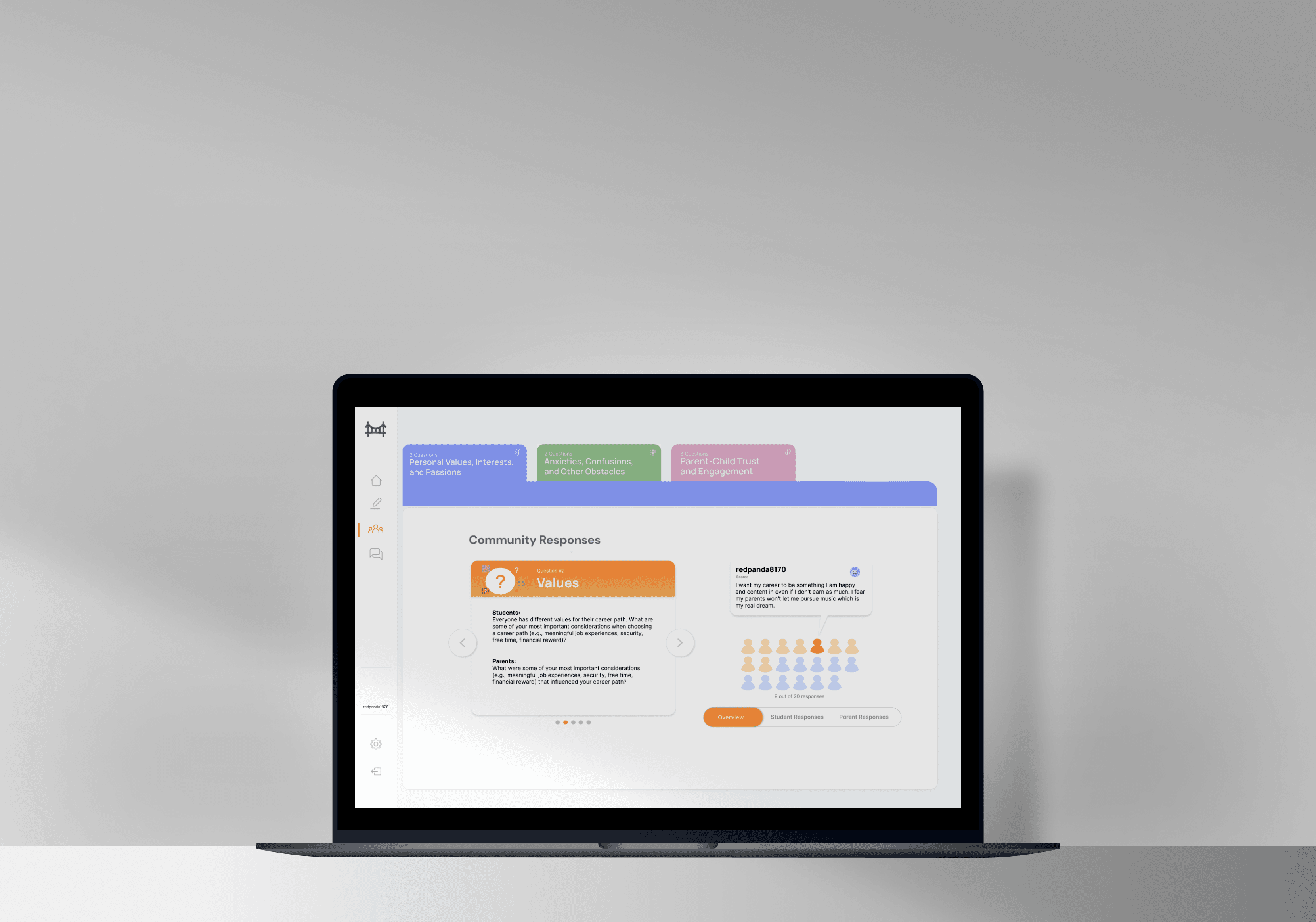
BridgeUs: Career Exploration Tools
Designing career exploration tools for teens from assumptions to evidence in AI-assisted HCI
learning, motivation, action @tech4good lab
Project Type
Responsive Web · UX/UI Design · EdTech
Duration
9 months
TOOLS
Figma, FigJam, LaTex, OpenAPI, SerpAPI, RAG
My Roles
UX Research & Design
Literature Synthesis
Prototyping in Figma
User Testing and Analysis
AI Prompt and System Design
Team
3 min read
Case Study
please keep scrolling
Problem
Research Questions and Assumptions
At the start of the project, our research team assumed that breakdowns in parent-teen communication were a primary barrier to career exploration. We believed structured reflection exercises and shared tools could surface unmet emotional needs and reduce conflict.
A/ How might we support better communication between parents and teens around academic and career planning?
B/ How does short-form content affect how teens understand and evaluate career information?
C/ Can AI-driven goal setting help teens explore and commit to potential career paths?
This assumption shaped our early design decisions and the tools we chose to build. At this stage, we were designing for a problem we believed existed, rather than one we had fully validated.
discovery
Research Methods and Design Translation
Rather than designing from intuition alone, we grounded our work in existing cognitive, educational, and decision-making literature. Our goal was not to reproduce academic findings, but to operationalize them into interactive systems that could be tested with real users.
Each research finding was treated as a design constraint rather than a solution. We translated abstract models into concrete interface decisions, then tested whether those decisions meaningfully affected user understanding or behavior.
Translation of models into UI and interaction patterns
Low to mid-fidelity prototypes in Figma
User testing with approximately 12 high school students
Longitudinal testing of AI-assisted tools with 3 participants over 3 months
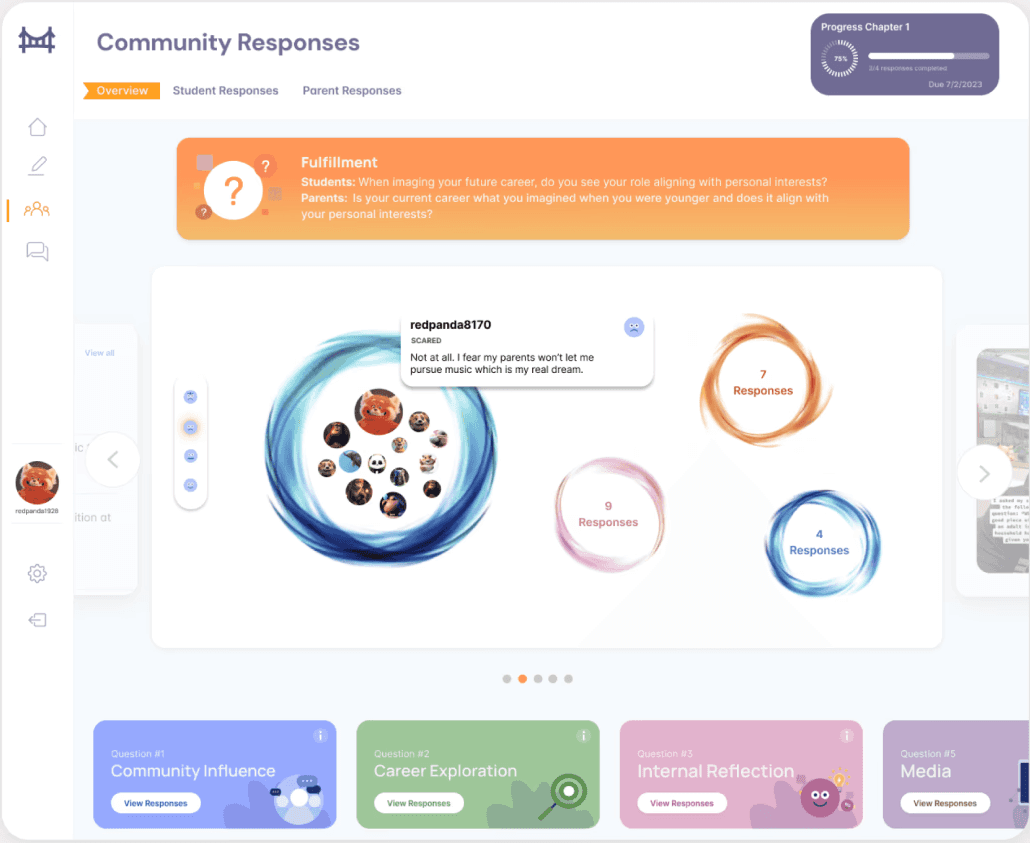
Before
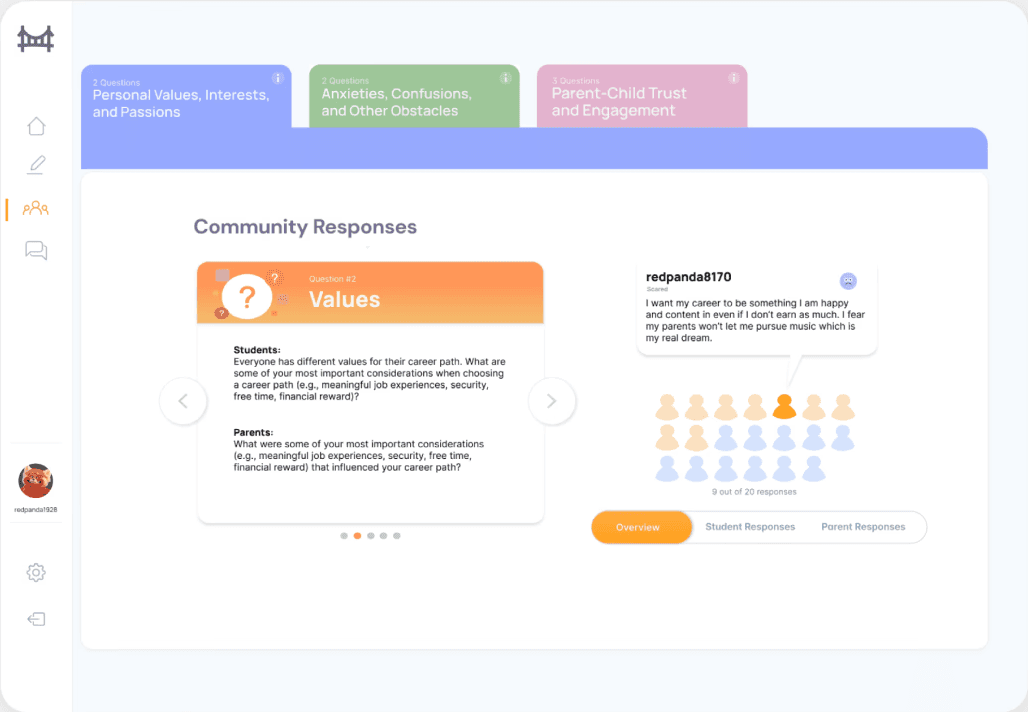
After
Design
Iteration and Testing Across 3 Directions
i got 3 sections here
1/ Parent–Teen Communication Tools
Reflection prompts
Structured communication exercises
Shared interface concepts
Designing for imagined struggle can create irrelevant solutions
Contrary to our expectations, most participants reported healthy relationships with their parents and did not perceive communication as a major obstacle. The tools we built felt unnecessary or artificial to users who did not share our initial framing of the problem.
This was the first major moment where our assumptions directly conflicted with user reality.
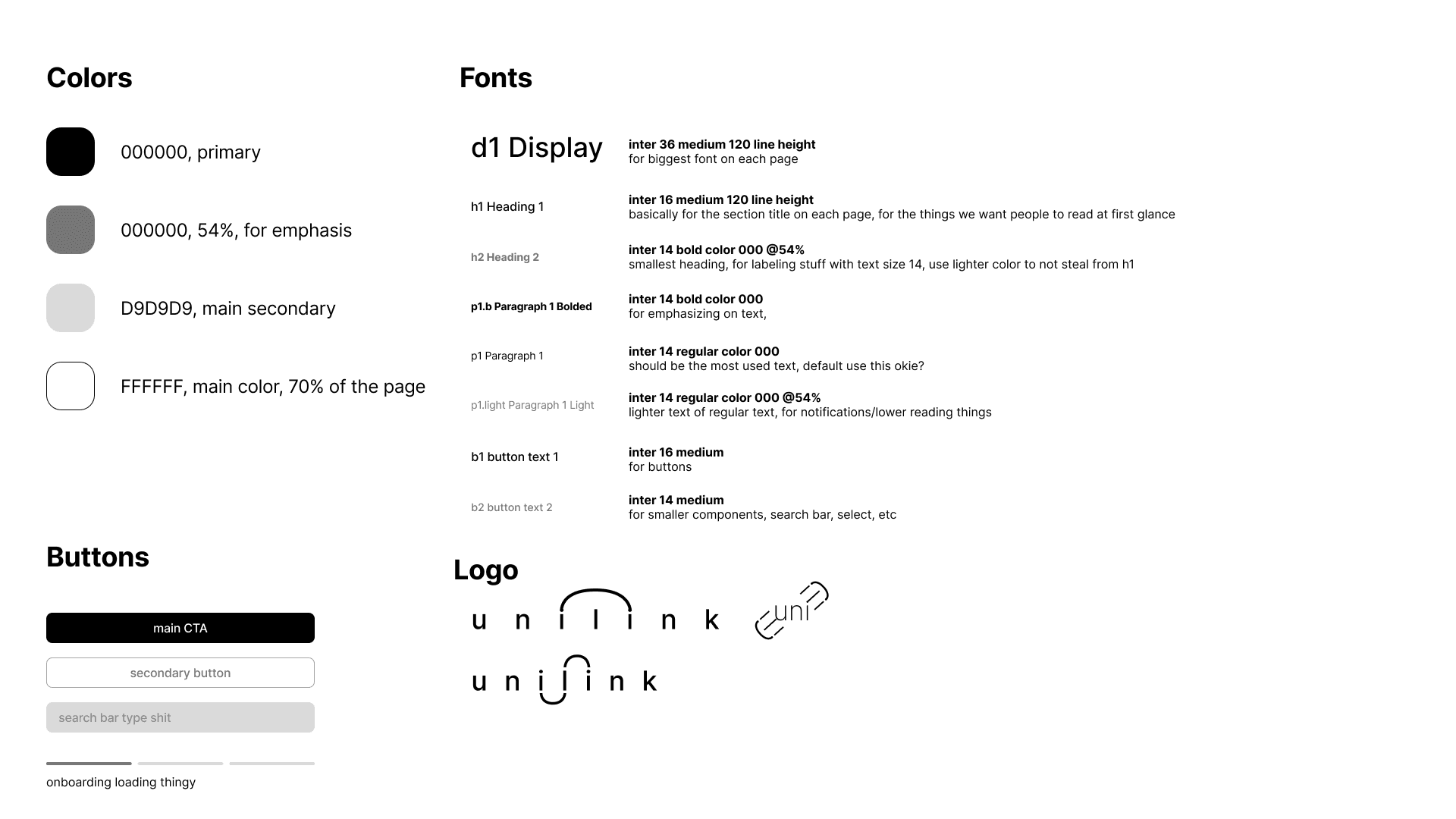
Screenshot of the abandoned feature with annotation explaining why it failed
Before and after flow diagrams
2/ Short-Form Content and Career Understanding
Career information presented in short-form vs traditional formats
Interaction with a career exploration database
Comparison across different interests such as STEM and arts
Knowledge alone does not drive action
Short-form content did increase engagement and lowered the barrier to initial understanding. However, increased comprehension did not translate into clearer career intent or concrete next steps.
What surprised us was that participants were more excited by the breadth of information available than by the format in which it was delivered. Access and discoverability mattered more than presentation style.
Comparative prototype screenshot
Highlighted quotes from testing sessions
User journey showing understanding vs action gap
3/ AI-Assisted Goal Setting and Planning
RAG-based AI system
Goal-oriented conversational prompts
Multiple output formats including text, checklist, and voice
Conversational goal setting can increase perceived agency
We initially envisioned AI as both a research assistant and a planning guide. In practice, participants quickly learned to trust the system for reflection and goal articulation, but not for factual accuracy or step-by-step planning.
High hallucination rates limited the system’s effectiveness as an information source. However, the conversational goal-setting structure helped participants clarify motivation and feel more confident about their future direction.
Diagram showing shift from research tool to planning assistant
Example AI conversations with annotations; Prompt evolution timeline
Design
Synthesis and Design Takeaways

Navigating the final design
Reflections
Across all three research directions, the most important lesson was the danger of designing for assumed problems. Each failed or weakened hypothesis forced us to reconsider not just our interface decisions, but the values embedded in our designs.
Results
I learned to treat user behavior as the primary source of truth, even when it contradicted established theory or my own expectations.
Things I'll Change
Given more time, I would redesign the system to explicitly connect self-understanding to action. This might include structured commitments, accountability loops, or collaboration with counselors rather than relying solely on individual reflection.
I would also further explore how AI can scaffold decision-making without replacing critical thinking, particularly for users at different stages of motivation.